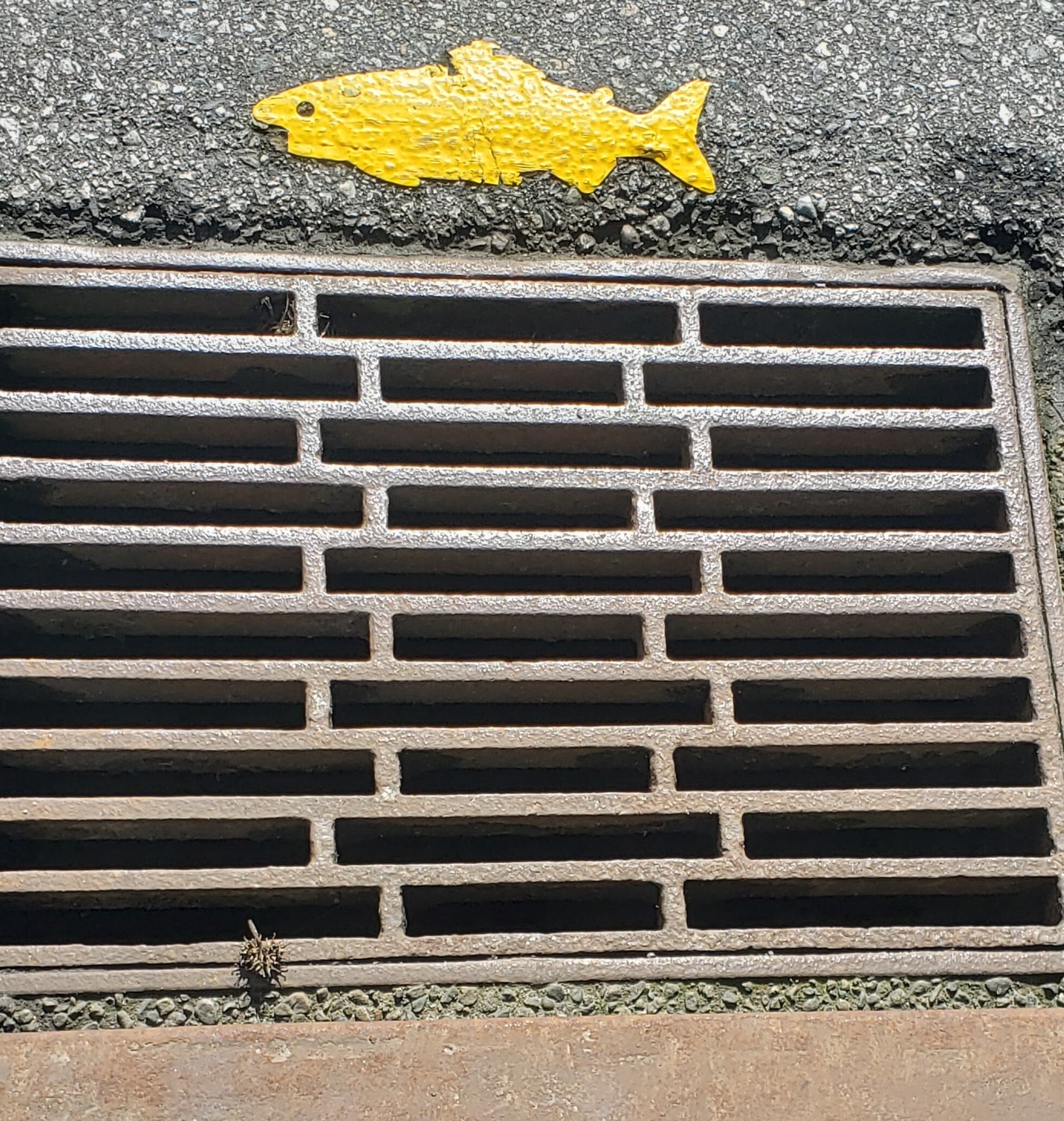
Discovering a preservative that can extend the life of rubber tires, brakes and hoses, translating into fewer of these products ending up in the landfill sounds like a good environmental solution to the problem of rubber degradation. Now, what if such an anti-degradant exists in your garden hose and in the brakes and tires on your car, but it’s so toxic that it kills salmon and has recently been linked to Parkinson’s disease in humans?
Often, the solution to one problem can absolutely ravage our safety in a completely different area. What I am talking about in this case is: 6PPD-quinone (6-phenyl-1,2,3,4-tetrahydroquinoline quinone or 6PPDQ) (CAS No. 2754428-18-5). Developed in the early 1960s and patented in 1965, 6PPDQ was widely used by the 1970s. It is not an additive exactly, but a transformation product that forms when 6PPD (CAS No. 793-24-8) reacts with ozone and oxygen. The idea behind it was to make tires last longer, which is a great environmental objective, however, 6PPDQ has been found to have a devastating effect on salmon, specifically coho and chinook salmon.
Read More
Tags:
Stormwater,
chemical safety,
California,
British Columbia,
Washington,
Environmental Compliance,
EPA Regulations,
Environmental Health and Safety,
EHS Compliance,
EHS Software,
ESG Compliance,
Compliance Management,
6PPDQ,
salmon,
tire manufacturing,
rubber tires,
rainwater
Effective March 1, 2021, the Environmental Protection Agency (EPA) has issued a revised “National Pollutant Discharge Elimination System (NPDES) Multi-Sector General Permit for Discharges from industrial Activities” (MSGP).” This new 2021 MSGP replaces EPA’s 2015 MSGP (which expired in 2020 but was continued by administrative fiat). Compliance begins May 30, 2021 for facilities that have been subject to the 2015 MSGP. Even though EPA's direct permit authority applies only in limited parts of the country, the new MSGP provides a reminder to organizations nationwide that stormwater management efforts need to be thorough and up-to-date.
Read More
Tags:
EPA,
Stormwater,
clean water,
NPDES,
Environment,
MSGP
The Clean Water Act (CWA) requires the Environmental Protection Agency (EPA) to define “oil” and “hazardous substances”, and includes requirements that EPA establish “procedures, methods, and equipment and other requirements for equipment to prevent discharges of oil and hazardous substances from vessels and from onshore facilities and offshore facilities, and to contain such discharges….” (33 USC § 1321(j)(1)(C)) Since 1973, EPA has required owners and operators of non-transportation-related onshore and offshore facilities to establish and implement Spill Prevention, Countermeasure and Control (SPCC) Plans if they manage more than threshold levels of oils (I summarized these requirements here).
Read More
Tags:
Environmental risks,
Environmental,
EHS,
EPA,
Hazcom,
effluent,
Stormwater,
clean water,
spcc
On June 27, 2017 the Environmental Protection Agency (EPA) and the U.S. Army Corps of Engineers (Corps) jointly proposed to revise their regulatory definitions of “waters of the United States”, applying authority under the Clean Water Act (CWA). Their proposals would rescind expansive versions adopted in June 2015, during the Obama Administration, and reinstate the text of the definitions in place until 2015. These actions represent the latest chapter in a saga dating back to United States Supreme Court decisions in 2001 and 2006 overturning decades-long understandings of which waters CWA empowers the agencies to regulate. (I wrote about this history in a blog about the 2015 rules here).
Read More
Tags:
Environmental risks,
Environmental,
EPA,
Stormwater,
clean water
Effective February 16, 2017, the Environmental Protection Agency (EPA) has issued a revised “National Pollutant Discharge Elimination System [NPDES] General Permit for Discharges from Construction Activities” (CGP).” This new 2017 CGP replaces EPA’s 2012 CGP, updating requirements for entities with construction sites that disturb more than 1 acre of land – readers should keep in mind that this covers individual projects, so that even if your organization isn’t a construction company or developer, a big expansion at your facility may be covered.
Read More
Tags:
Health & Safety,
Environmental risks,
Environmental,
EPA,
Stormwater
The Clean Water Act’s (CWA’s) national water quality purview includes National Pollutant Discharge Elimination system (NPDES) provisions for “stormwater” that may contain pollutants such as oil, industrial contaminants, and sediment. This means run-off of rain or snow melt containing pollutants from manufacturing, processing, or raw material storage areas at an industrial site, that passes through a “conveyance” (such as a storm drain) into waters of the United States. The Environmental Protection Agency (EPA) administers or delegates permit programs covering discharges from the following:
Read More
Tags:
Environmental risks,
Environmental,
EHS,
EPA,
Hazcom,
Stormwater
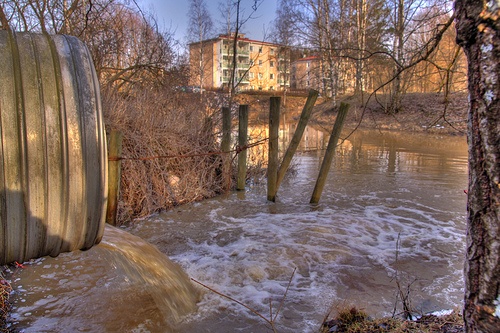
The Clean Water Act (CWA) provides detailed national requirements, under which the U.S. Environmental Protection Agency (EPA) and states cooperate to establish water quality goals, and administer planning and discharge permit programs to preserve and enhance water quality nationwide. To improve the efficiency of these massive efforts, EPA has launched a series of initiatives to provide for electronic reporting and data management. Effective December 21, EPA has adopted extensive revisions to CWA rules to require electronic reporting instead of paper reporting under a wide variety of CWA provisions. These rules provide facilities with deadlines after 12 months (“Phase 1”) for high-priority discharger reports, and 5 years (“Phase 2”) for other discharger requirements. They also provide a series of deadlines for state regulators to share and report information electronically, ranging from 9 months to 6 years from now. EPA emphasizes that these revisions do not increase the amount of information reported by various entities, and so asserts that entities’ reporting burdens should actually diminish once they’ve managed their transition to the new methodologies. EPA also anticipates significant benefits from data sharing among agencies.
Read More
Tags:
Health & Safety,
EHS,
EPA,
Hazcom,
Stormwater
What is “green infrastructure”? Green infrastructure incorporates vegetation, soils, and natural processes to manage water and create healthier urban environments. When talking about an area the size of an entire city or county, green infrastructure refers to an assorted collection of natural areas that provide habitat, flood protection, cleaner air, and cleaner water. When referring to an individual neighborhood or smaller locale, green infrastructure refers to stormwater management systems that simulate nature by soaking up and storing water, which then can be redirected back into sustainable usage by those communities.
Read More
Tags:
Health & Safety,
Environmental risks,
Environmental,
EPA,
Transportation,
Stormwater
The Clean Water Act (CWA) provides federal agencies with authority to regulate a wide range of activities that may affect “waters of the United States”—sometimes called “navigable waters.” These activities include water quality planning and discharge regulation by the US Environmental Protection Agency (EPA) and delegated states, and regulation of projects that may lead to “dredge and fill” of waters, through permits issued by the US Army Corps of Engineers.
Read More
Tags:
Business & Legal,
Environmental risks,
Environmental,
EHS,
EPA,
Underground Storage Tanks,
effluent,
Stormwater
Various changes were made to environmental legislation during 2012, both in the US and internationally. Here follows a summary of some of the headlines.
Read More
Tags:
International,
California Legislation,
Environmental,
EPA,
Greenhouse Gas,
ghg,
Stormwater