
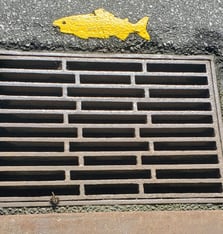
Discovering a preservative that can extend the life of rubber tires, brakes and hoses, translating into fewer of these products ending up in the landfill sounds like a good environmental solution to the problem of rubber degradation. Now, what if such an anti-degradant exists in your garden hose and in the brakes and tires on your car, but it’s so toxic that it kills salmon and has recently been linked to Parkinson’s disease in humans?
Often, the solution to one problem can absolutely ravage our safety in a completely different area. What I am talking about in this case is: 6PPD-quinone (6-phenyl-1,2,3,4-tetrahydroquinoline quinone or 6PPDQ) (CAS No. 2754428-18-5). Developed in the early 1960s and patented in 1965, 6PPDQ was widely used by the 1970s. It is not an additive exactly, but a transformation product that forms when 6PPD (CAS No. 793-24-8) reacts with ozone and oxygen. The idea behind it was to make tires last longer, which is a great environmental objective, however, 6PPDQ has been found to have a devastating effect on salmon, specifically coho and chinook salmon.
How 6PPDQ kills salmonids
What happens with rubber tires is that, during production, a chemical called 6PPD is added to the rubber to serve as an antioxidant and antiozonant, but 6PPD exposed to oxygen and ozone transforms into 6PPDQ. As the tires wear down during driving, 6PPDQ particles are left on the roadways and accumulate until the next rain. When rainfall occurs, these particles are washed from the streets and other paved areas into stormwater drainage systems that flow into nearby creeks, rivers and streams. The concentration of 6PPDQ in waterways increases during storms and can spike, causing lethal conditions for salmon, as the levels exceed safe limits. Even trace levels (41 parts per trillion) can be lethal and translate into 50% mortality rates to coho and other sensitive salmonids (Canary in the Creekbed: Online seminar with Nathan Ivy, April 8, 2026).
In 2020, 6PPDQ was discovered and identified as the stormwater chemical responsible for urban runoff mortality syndrome (URMS) observed in coho salmon (Oncorhynchus kisutch) around Puget Sound over the last 25 years (What We Know: 6PPD and 6PPD-quinone, Interstate Technology Regulatory Council).
Research done by Nathan Ivy, at the Washington State University, has shown that high concentrations of 6PPDQ “can both kill juvenile coho outright and alter development in survivors in ways that reduce performance” (Canary in the creek bed: real-time evidence of 6ppdq-induced mortality and developmental impairment in coho, December 2025).
Lab environment coho are sensitive at 95 nanograms/litre or 95 parts per trillion (Zhenyu Tian, Center for Urban Waters, University of Washington, Tacoma). Chinook and coho salmon are not the only species vulnerable to 6PPDQ; it has also been demonstrated to be acutely lethal to brook trout and rainbow trout (or steelhead trout).
Artificial turf fields and other sources of 6PPDQ
A University of British Columbia (UBC) recent study has linked artificial turf fields to the problem of 6PPDQ leaching into stormwater for years after installation. What they found is that the crumb rubber used to make these “fields” leaches 6PPDQ and the contamination persists for a decade or more, polluting fish-bearing waterways (Katie Moloney, Scholes Lab, UBC). Research done by Dr. Rachel Scholes and her team on artificial turf fields found that concentrations exceeding lethal levels for juvenile coho were still on-going after the field had been installed for more than six years.
More studies are needed to examine the uptake of 6PPDQ in edible plants from garden hoses, the concentrations that cause health effects, and the factors influencing this process. Rubber hoses that have been left in the sun have the potential to leach chemicals into the soil and into food crops. Water contaminated by 6PPDQ has been shown to translocate from roots to shoots in crops like lettuce and other leafy vegetables grown in Israel, Switzerland, Italy and Spain (Uptake of tire-derived compounds in leafy vegetables and implications for human dietary exposure, Sherman et al., 2024).
Researchers have found 6PPD and 6PPDQ in urine, blood, and breast milk in humans. They have also detected 6PPDQ in the fluid around the ovaries, umbilical cord blood, in the brain and spinal fluid (Washington State Department of Health). Possible channels of exposure include diet (tire runoff in rain and then onto agricultural crops), air (particles released from car parts into the air), work (direct contact with tires, possible ingestion if hands have 6PPDQ on them when eating), or soil (where particles on food or hands can result in eating small amounts). Several studies suggest a possible link between 6PPD/6PPDQ exposure and neurological disorders. Notably, Fang et al. reported that brain tissue levels of 6PPD and 6PPDQ in Parkinson’s disease patients were twice those of control subjects, implying a possible link to disease pathogenesis. (Environmental and Human Health Risks of 6PPD and 6PPDQ: Assessment and Implications, Zhang et al., October 2025)
Food web concerns
Since research is active on many different fronts for 6PPDQ, the data for how the toxicity is playing out in food webs is not fully fleshed out. Knowing that coho salmon are a sentinel species, being highly sensitive to toxic urban runoff, they serve as an early warning for how other species may also be affected. Both Northern and Southern Resident killer whales feed on coho at varying levels through the year and scientists at National Oceanic and Atmospheric Administration (NOAA), the University of Washington (Tacoma), WSU Puyallup, University of Saskatchewan (Toxicology Centre), Simon Fraser University (SFU Brown Lab), UBC (Scholes Lab), Vancouver Island University (VIU), as well as other international institutions are investigating how bioaccumulation, and any possible biomagnification, of 6PPDQ may exist in the food chain. Concerns over trophic transfer need further study.
In terms of bioaccumulation, it has been found that 6PPDQ is known to be hydrophobic and tends to cling to particles and sediments, but it is also taken up by organisms. Studies have shown that 6PPDQ accumulates in the brain, liver, and gills of fish, including zebrafish, as well as the digestive system. (Neurological impairment is crucial for tire rubber-derived contaminant 6PPDQ-induced acute toxicity to rainbow trout, Liao et al.)
What regulations exist for 6PPDQ?
In British Columbia (BC), the Ministry of Environment has developed a Type B short-term acute water quality guideline of 0.01 µg/L for 6PPDQ in freshwater to help protect salmon. Nothing further has been developed due to the limited availability of long-term toxicity data. Under the Environmental Management Act, 6PPDQ levels are being monitored in BC, and the BC Contaminated Sites Regulation may be applicable to areas where high volumes of tire-derived products (e.g., crumb rubber) have caused environmental contamination. In Metro Vancouver and on Vancouver Island, researchers are involved in monitoring 6PPDQ, tracking its impact and creating data for policy makers to work from.
The Ministry of the Environment, Climate Change and Nature in Canada is evaluating the situation and has announced that regulation is coming, but no regulations exist at this time.
In the United States, the Environmental Protection Agency (EPA) finalized a rule in December 2024 under Section 8(d) of the Toxic Substances Control Act (TSCA) that required manufacturers and importers of 6PPD to submit unpublished health and safety studies on 6PPD and 6PPD-quinone to EPA by April 14, 2025. (89 FR 100756)
An Advance Notice of Proposed Rulemaking (ANPRM) was published in November of 2024 by the EPA to begin the process of gathering information on 6PPD/6PPDQ that could be used to inform subsequent regulatory action under TSCA Section 6(a). The comment period is now closed, but was extended by EPA until March 24, 2025. (Advance Notice of Proposed Rulemaking on 6PPD and Its Transformation Product, 6PPD-quinone, EPA)
EPA has developed a draft analytical method, Determination of 6PPD-Quinone in Aqueous Matrices Using Liquid Chromatography with Tandem Mass Spectrometry (Draft Method 1634) to detect 6PPDQ in water and has finalized screening values to protect aquatic life.
In Washington state, legislation has been passed to make it the first state to specifically target 6PPD in tires. The Safer Products Program in Washington also has 6PPD listed as a “Priority Chemical” with tires identified as a “Priority Consumer Product.” Washington adopted an aquatic life criterion for 6PPD-q under its water quality standards in August of 2024.
In California, the Department of Toxic Substances Control (DTSC) has listed motor vehicle tires containing 6PPD as a “Priority Product” under the Safer Consumer Products (SCP) regulations. Tire manufacturers selling in California were also required to submit a preliminary alternatives analysis in 2024 and final reports are expected this year to force the investigation of alternatives to 6PPD. Litigation, in regards to 66PPD in tires, is active in California, where commercial fishing groups have filed lawsuits against tire manufacturers, arguing that 6PPD in tires violates the Endangered Species Act, due to salmon mortality.
It should be noted that although efforts to determine a safer alternative are active in both Washington and California, most alternatives, so far, are not proving to show much promise.
Filtering out the dangers
As research continues, there are ways to mitigate the impacts and damage of 6PPDQ on the environment. Rain gardens have been found to filter the pollutants away from sensitive areas. The Natural Sciences and Engineering Research Council of Canada reports that specially designed gardens could reduce the amount of a toxic chemical associated with tires entering our waterways by more than 90%. Rain gardens or bioretention cells, are engineered to limit polluted water from getting into streams and to soak up contaminants when road runoff flows onto them (Rain gardens could save salmon from toxic tire chemicals, February 2024). UBC researchers, Dr. Timothy Rodgers and Dr. Rachel Scholes, tested a rain garden with waters spiked with 66PDQ in Vancouver, BC, and found that only about two to five per cent of 6PPDQ made it through, with about 75 per cent captured by the soil and plants. Dr. Scholes says that green infrastructure could be placed in areas with large highways that runoff into salmon-bearing streams.
Home gardeners, concerned with potential exposure to 6PPDQ, may want to purchase a rain barrel and fill watering cans from the barrel’s spout for their vegetable and herb gardens. Buying a polyurethane hose would be a good solution for anyone looking to water a larger garden, where watering cans are not practical.
Rolling forward
Fundamental to extricating ourselves from the issues of 6PPDQ will be the improvement of regulations for which chemicals are safe to use in the manufacturing of rubber tires. Thoughtful innovation that is thoroughly tested before reaching the market, and extensive research and scientific studies will also be a key factor in how we roll forward.
About the author

Jane MacVicar is a Senior Editor for STP ComplianceEHS.
She works on a diverse catalogue of environmental publications that are recognized across North America as effective tools to ensure regulatory compliance with complex requirements. She is also a volunteer for the Mossom Creek Hatchery in Port Moody, BC and the Inspiration Garden in Coquitlam, BC.