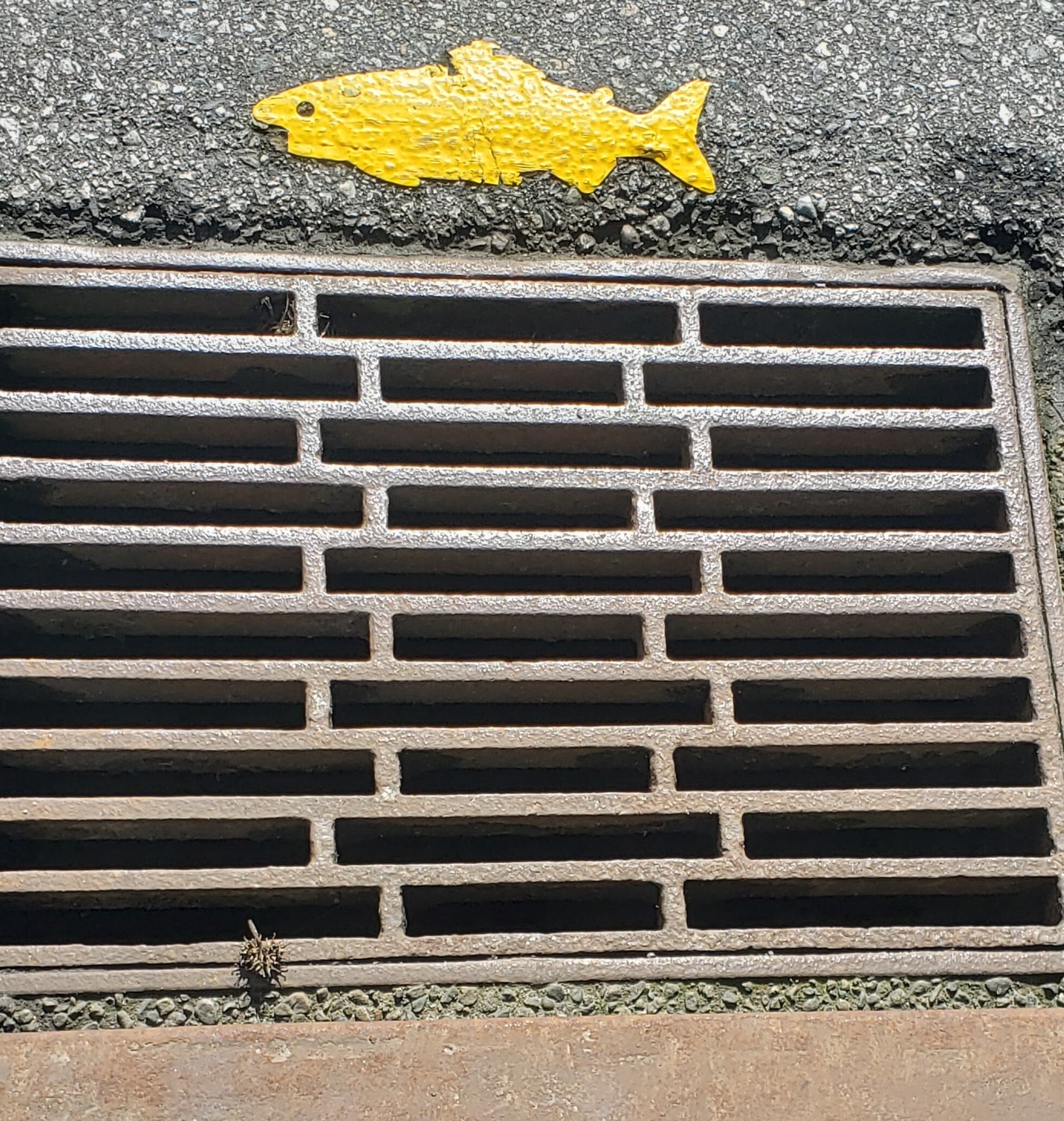
Discovering a preservative that can extend the life of rubber tires, brakes and hoses, translating into fewer of these products ending up in the landfill sounds like a good environmental solution to the problem of rubber degradation. Now, what if such an anti-degradant exists in your garden hose and in the brakes and tires on your car, but it’s so toxic that it kills salmon and has recently been linked to Parkinson’s disease in humans?
Often, the solution to one problem can absolutely ravage our safety in a completely different area. What I am talking about in this case is: 6PPD-quinone (6-phenyl-1,2,3,4-tetrahydroquinoline quinone or 6PPDQ) (CAS No. 2754428-18-5). Developed in the early 1960s and patented in 1965, 6PPDQ was widely used by the 1970s. It is not an additive exactly, but a transformation product that forms when 6PPD (CAS No. 793-24-8) reacts with ozone and oxygen. The idea behind it was to make tires last longer, which is a great environmental objective, however, 6PPDQ has been found to have a devastating effect on salmon, specifically coho and chinook salmon.
Read More
Tags:
Stormwater,
chemical safety,
California,
British Columbia,
Washington,
Environmental Compliance,
EPA Regulations,
Environmental Health and Safety,
EHS Compliance,
EHS Software,
ESG Compliance,
Compliance Management,
6PPDQ,
salmon,
tire manufacturing,
rubber tires,
rainwater
The Toxic Substances Control Act (TSCA) includes procedures for the Environmental Protection Agency (EPA) to evaluate risks presented by existing chemicals using the latest scientific information – incorporating information developed after a chemical entered use in the US. Based on these reviews, EPA updates its regulatory requirements, ranging from labeling-only through use restrictions up to and including bans from further distribution and use. (I summarized these review requirements HERE). On December 18, 2024, EPA published restrictions in the Federal Register, for carbon tetrachloride (CTC) and perchloroethylene (PCE), based on its hazard reviews for those chemicals. The rest of this note discusses these new restrictions.
Read More
Tags:
Environmental risks,
Environmental,
EPA,
tsca,
Environmental Projects,
chemical safety,
Environment,
Environmental Policy,
Chemical Safety Board,
Hazardous Chemicals,
Environmental Compliance,
EPA Regulations,
EPA Standards
On May 8, 2024, the Environmental Protection Agency (EPA) published rule revisions adding two perfluoro chemicals -- Perfluorooctanoic Acid (PFOA) and Perfluorooctanesulfonic Acid (PFOS) – as hazardous substances under the federal Superfund law (Comprehensive Environmental Response, Compensation, and Liability Act (CERCLA)). This listing is the latest regulatory action by EPA tightening controls on per- and poly-fluoroalkyl substances (PFAs); the initiatives are covered under the agency’s “PFAs Strategic Roadmap: EPA’s Commitments to Action 2021—2024,” promulgated in October 2021. The remainder of this note describes the latest action, which finalizes a proposal issued in August 2021 (which I wrote about HERE).
Read More
Tags:
Environmental risks,
Environmental,
EPA,
chemical safety,
CERCLA,
Environment,
PFAS,
PFOS
On March 1, 2024, the Environmental Protection Agency (EPA) revised Accidental Release Prevention (ARP) program rules under the Clean Air Act (CAA). ARP was authorized by the 1990 Clean Air Act (CAA) Amendments, and is often known by its core requirement that targeted facilities prepare Risk Management Programs (RMPs) to prevent and respond to potential catastrophic releases of chemicals. The adoption finalizes an agency proposal from 2022 (it also recounts a long series of proposal dating back to 2014; I wrote about it HERE), in which the Biden-era EPA proposed to many of the narrowing amendments to RMP/ARP enacted in 2019 during the Trump Administration (I wrote about the 2019 changes HERE).
The rest of this note summarizes the new revisions, noting their differences from current rules.
Read More
Tags:
Health & Safety,
EPA,
CAA,
chemical safety,
Air Toxics,
Clean Air Act,
Toxics Release
The Occupational Safety and Health Administration’s (OSHA’s) Standard for Process Safety Management of Highly Hazardous Chemicals (usually referred to as “PSM”) requires extensive risk assessments and reduction efforts by facilities where a significant incident involving these chemicals might have catastrophic consequences. OSHA adopted PSM in 1992, and has made only minor technical revisions in the ensuing three decades. OSHA has also issued enforcement guidance to its inspectors, which it had not revised since 2012. However, in December 2023 OSHA issued an extensive new PSM enforcement policy, most of which is formatted in a total of 192 Questions and Responses designed to guide enforcement – and compliance that can obviate enforcement. The remainder of this note provides a very brief summary of the 120 page Enforcement Policy document.
Read More
Tags:
Health & Safety,
OSHA,
Safety and Health at Work,
workplace safety,
chemical safety,
PSM
Several national laws empower the US Environmental Protection Agency (EPA) to set standards for the cleanup of contamination that resulted from accidental or deliberate releases of chemicals and other materials onto land or into water. EPA’s actions include direct requirements for cleanup by responsible parties, and also inform other parties’ evaluations of if and how to prepare contaminated areas for reuse – often referred to as “brownfields” since they’re assumed to be dirtier than never-used “greenfields.” The remainder of this note discusses EPA’s 73 page “Climate Smart Brownfields Manual,” issued by the agency in 2021
Read More
Tags:
Health & Safety,
EPA,
chemical safety,
Hazardous Waste,
Environment
The US Environmental Protection Agency (EPA) has taken two actions to expand chemical release reporting under its Toxic Release Inventory (TRI) program. EPA administers TRI as one of the distinct programs created by the Emergency Planning and Community Right-To-Know Act of 1986 (EPCRA, also referred to as SARA Title III). EPA has finalized its previously-proposed addition of 12 chemicals, and separately has proposed to tighten existing requirements for two more. (I’ve discussed TRI several times, including HERE. The rest of this note discusses these changes.
Read More
Tags:
EPA,
chemical safety,
Toxic,
Toxics Release
The Environmental Protection Agency (EPA) is issuing a proposal to list two perfluoro chemicals -- Perfluorooctanoic Acid (PFOA) and Perfluorooctanesulfonic Acid (PFOS) as hazardous substances under the federal Superfund law (Comprehensive Environmental Response, Compensation, and Liability Act (CERCLA)). This proposal is the latest in a string of regulatory actions by EPA to tighten controls on per- and poly-fluoroalkyl substances (PFAs); the initiatives are covered under the agency’s “PFAS Strategic Roadmap: EPA’s Commitments to Action 2021—2024,” promulgated in October 2021. The remaninder of this note describes the latest action, and summarizes the Strategic Roadmap.
Read More
Tags:
Health & Safety,
OSHA,
Safety and Health at Work,
chemical safety,
PFAS
The federal Chemical Safety and Hazard Investigation Board – which usually refers to itself as the Chemical Safety Board or CSB – conducts independent investigations of major chemical accidents, issues accident-specific findings, and offers specific or general recommendations for improved chemical handling and regulation. In August 2022, CSB has issued compliance guidance addressing its “Chemical Incident Reporting Rule” (actually 6 rules, in 40 CFR part 1604) (I wrote about the Rule when it was adopted in February 2020, HERE). The remainder of this note summarizes CSB’s latest guidance.
Read More
Tags:
Health & Safety,
OSHA,
Safety and Health at Work,
chemical safety
No, the title is not a stutter; I’ve written it that way to emphasize that the new Environmental Protection Agency (EPA) proposal to revise its Accidental Release Prevention (ARP) program rules under the Clean Air Act (CAA) represents only the latest step in nearly-decade-long changes to these requirements across the last three Presidential administrations. ARP was enacted after the 1990 Clean Air Act (CAA) Amendments, and its often known by its core requirement that targeted facilities prepare Risk Management Programs (RMPs) to prevent and respond to potential catastrophic releases of chemicals.
Read More
Tags:
EPA,
chemical safety,
Environment,
Toxics Release