Based on a limited survey of the Certified Unified Program Agencies (CUPAs) of the California Environmental Protection Agency (Cal/EPA), the Department of Toxic Substances Control (DTSC) found the following top eight violations:

Based on a limited survey of the Certified Unified Program Agencies (CUPAs) of the California Environmental Protection Agency (Cal/EPA), the Department of Toxic Substances Control (DTSC) found the following top eight violations:
Tags: Corporate Governance, Health & Safety, Environmental risks, Environmental, EPA

Do you ever wonder whether auditing of greenhouse gas emissions is working? It may be a bit early in the game to say for sure, given that GHG emission tracking standards are a recent phenomenon. But an annual report compiled by the U.S. Environmental Protection Agency (EPA) may be a good gauge of trends in emission reductions, judging by its latest installment.
Tags: Corporate Governance, Business & Legal, Health & Safety, Environmental risks, Environmental, EHS, EPA, Greenhouse Gas, ghg
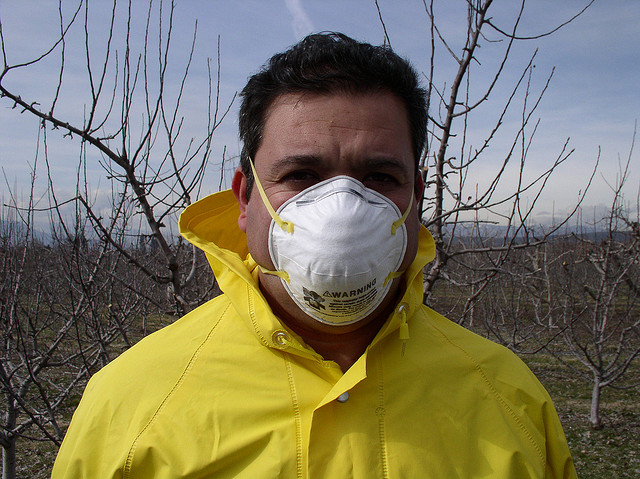
American workers suffer more than 190,000 illnesses and 50,000 deaths annually as a result of working with and being exposed to tens of thousands of chemicals every day. Workplace chemical exposures have been linked to cancers, and other lung, kidney, skin, heart, stomach, brain, nerve, and reproductive diseases. While many of these chemicals are suspected of being harmful, only a fraction of them are regulated in the workplace.
Tags: Business & Legal, Health & Safety, OSHA, Environmental risks, Environmental, Hazcom

The Occupational Safety and Health Administration (OSHA) requires employers to prepare and maintain records of occupational injuries and illnesses (I&Is), and to provide employees with annual summaries of I&I statistics for their "establishment." At present, OSHA and/or the Department of Labor's Bureau of Labor Statistics (BLS) can demand that selected employers report this information to them. BLS uses this information for statistical analyses of factors that cause workplace injuries and illnesses, and OSHA uses it to set rulemaking and enforcement priorities. In addition, OSHA requires all employers to report work-related accidents that result in one or more serious injuries or deaths (what OSHA calls "catastrophes").
Tags: Corporate Governance, Business & Legal, Employer Best Practices, Health & Safety, Employee Rights, Environmental

Dealers and brokers seeking hedging exposures to the Overnight Index Swap rate (OIS) are in luck. The Financial Accounting Standards Board (FASB) recently issued final guidance that allows dealer-brokers to designate the US OIS, the Fed Funds Effective Swap Rate, as a benchmark interest rate for hedge accounting purposes.
Tags: Business & Legal, SEC, Accounting & Tax, Accountants, US GAAP, GAAP

Most laws include penalty provisions, for assessment against people who fail to comply with legal responsibilities created by the laws. Back in 1996, Congress noticed that inflation was steadily reducing the deterrent effects of the penalties set forth in statutes, and that Congress itself was not reliably adjusting the maximum penalties assessable by enforcement personnel. Rather than burden itself with a responsibility to amend laws to keep up with inflation, Congress enacted the passed Debt Collection Improvement Act (DCIA) of 1996 to assign that responsibility to administrative agencies. DCIA requires most federal agencies to issue rules at least every 4 years, adjusting most penalties for inflation. In the ensuing 17 years, most agencies have made these periodic adjustments—larger in times of high inflation and lower in times of low inflation.
Tags: Corporate Governance, Business & Legal, Environmental risks, Environmental, EPA
Tags: Corporate Governance, Business & Legal, Health & Safety, Environmental risks, Environmental, Hazcom, Canadian
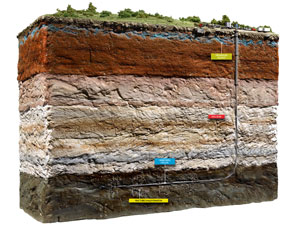
Advances in field techniques have recently made hydraulic fracturing— “fracking”—a major part of energy production in the United States and Canada. Frackers pump high-pressure fluids into rock formations to expand cracks and create pathways for valuable hydrocarbons to flow out. The stimulant fluids are usually water-based, with additional chemicals (acids, surfactants, biocides, etc.) to improve effectiveness and solid ‘proppants’ to prop open the expanded openings (sand, etc.). Read my earlier blog here
Tags: Health & Safety, California Legislation, Environmental risks, Environmental, EHS, Hazcom, fracking, hydraulic fracking, Oil & Gas

The SEC voted (3-2), on September 18, 2013, to propose pay ratio disclosure rules as required by Section 953(b) of the Dodd-Frank Wall Street Reform and Consumer Protection Act. It has issued for public comment until December 2, 2013, its proposed rule, Pay Ratio Disclosure, requiring companies to disclose ratio of the chief executive officer’s (CEO’s) compensation to the median compensation of their employees. According to the SEC staff, registrants are given flexibility in calculating the median employee and total compensation for disclosure purposes based on their size, structure, and how they compensate their employees. Stakeholders who would like to have their views considered should act quickly to meet the December 2, 2013, deadline.
Tags: Corporate Governance, Business & Legal, SEC, Accounting & Tax, Accountants

On October 28, British Columbia, California, Oregon and Washington signed the Pacific Coast Action Plan on Climate and Energy, committing themselves to align efforts to control greenhouse gas (GHG) reductions to combat climate change, and to promote clean energy. The Action Plan is adopted under the aegis of the Pacific Coast Collaborative, which encompasses these four jurisdictions plus Alaska.
Tags: California Legislation, Environmental risks, Environmental, EPA, Greenhouse Gas, ghg, climate change, Canadian